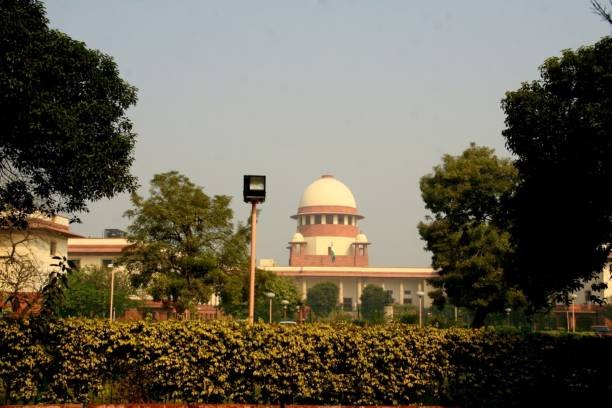
Case UpdateConstitutional Law📍 Supreme Court of India
Right To Access & Use Internet A Fundamental Right Of Every Individual Including Children: Supreme Court
✍️ By Roojhal Jain📅 17 Oct 2026🔄 Updated 22 Oct 2026👤 For: All Legal Professionals📰 Source:
LiveLaw
The Supreme Court declared that the right to access and use the internet is a fundamental right under Articles 21 and 19(1)(a) of the Constitution, extending equally to children, while issuing sweeping directions to eliminate Child Sexual Exploitation & Abuse Materials (CSEAM) online.
⚖️ Case Details
Harish & Others v. Union of India & Ors.
Supreme Court of India
Supreme Court Bench
17 Oct 2026
2026 LiveLaw (SC) 1063 (M.A. Nos. 2553-2554 of 2026 in Criminal Appeal Nos. 2161-2162 of 2024)
Whether internet access constitutes a fundamental right for individuals and children, and the extent of regulatory obligations required of intermediaries to curb online exploitation materials (CSEAM).
In a landmark judgment delivered on October 17, 2026, the Supreme Court of India explicitly ruled that the right to access and utilize the internet is an integral facet of fundamental freedoms under Articles 21 and 19(1)(a) of the Constitution of India.
Internet Access as a Fundamental Right
A Bench of the Supreme Court emphasized that in the modern digital era, denying children or individuals total access to the internet is untenable, as digital literacy and connectivity are crucial for education, development, and personal liberty.
Key Directions and Mandates
National Database on CSEAM: The Court directed the Union Government to create a comprehensive national database to track, identify, and ensure the swift removal of Child Sexual Exploitation and Abuse Materials (CSEAM) across all social media intermediaries.
Intermediary Accountability: Authorities were tasked with formulating strict guidelines to examine digital safety and evaluate whether revenues or profits derived by intermediaries from paywalls or subscriptions circulating abusive materials should be forfeited and disgorged.
Balancing Safety and Digital Rights: While tightening protective walls against illicit and harmful online content, the Bench reinforced that regulatory clampdowns must not disproportionately infringe upon legitimate public digital access.
The Supreme Court issued these directions while disposing of the connected miscellaneous applications, setting up a robust framework for digital child safety and online rights.
📌 Held by the Court
The Supreme Court declared internet access a fundamental right under Articles 21 and 19(1)(a), while ordering the creation of a national database and strict regulatory controls to purge CSEAM content.
⚡ Practical Impact
Elevates digital connectivity and internet access to explicit fundamental rights status in Indian constitutional jurisprudence, while mandating rigorous platform accountability.
👔 For Lawyers & Advocates
Vital reference for constitutional lawyers, cyber law practitioners, human rights advocates, and technology sector legal counsels.
🤖 Key Takeaway
Digital connectivity is essential to personal liberty and education, requiring a careful judicial balance between protecting fundamental internet rights and eradicating abusive online content.
About the author:Roojhal Jain, Legal Content Writer, Lexnomik
Roojhal Jain is a legal content writer at Lexnomik. He writes case updates, legal news and explainers that help legal professionals see what changed and why it matters. His work follows Lexnomik's editorial policy of checking every item aga…