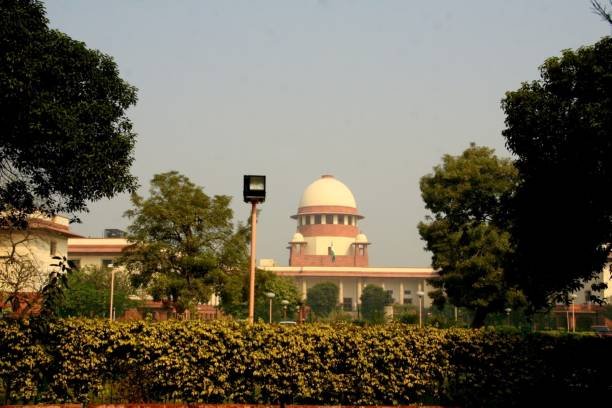
Case UpdateProperty & Real Estate📍 Supreme Court of India
State Cannot Accept Gift Of Temple Land; Govt Only Custodian, Not Owner Of Temple Properties Under HR&CE Act: Supreme Court
✍️ By Roojhal Jain📅 18 Oct 2026🔄 Updated 22 Oct 2026👤 For: All Legal Professionals📰 Source:
LiveLaw
The Supreme Court held that the State government and its instrumentalities cannot accept gifts of temple lands, reiterating that the government acts strictly as a custodian and trustee, not the owner, of properties managed under the Hindu Religious and Charitable Endowments (HR&CE) Act.
⚖️ Case Details
K. Ramalingam and Others v. Government of Tamil Nadu and Others
Supreme Court of India
Supreme Court Bench
17 Oct 2026
2026 LiveLaw (SC) 1067
Whether the State government or its administrative bodies can accept gifts of temple lands or claim ownership over properties governed under the HR&CE Act.
The Supreme Court of India ruled that state authorities have no legal competency or ownership rights to accept gift deeds or alienate properties belonging to public temples for administrative or government projects.
Government as Custodian, Not Owner
A Bench comprising Justice P.S. Narasimha and Justice Alok Aradhe emphasized that temple properties vest in the deity itself, and the government or administrative department functions purely in a fiduciary capacity as a custodian.
Key Observations and Legal Principles
Fiduciary Obligations: Trustees and state administrative bodies cannot treat temple lands as state property or accept gifts transferring them into government ownership.
Protection Against Alienation: Any attempt to gift, transfer, or divert endowments away from the direct spiritual and maintenance needs of the temple violates statutory trust bounds under the HR&CE Act.
The Supreme Court allowed the appeal, setting aside illegal administrative transfers regarding temple properties.
📌 Held by the Court
The Supreme Court ruled that the State cannot accept gifts of temple land and is merely a statutory custodian, not the owner, of such properties.
⚡ Practical Impact
Safeguards temple lands from arbitrary executive transfers, gifts, or commercial diversions by state administrative machinery.
👔 For Lawyers & Advocates
Crucial precedent for property law, endowment litigators, trust lawyers, and public law practitioners.
🤖 Key Takeaway
Temple properties vest in the deity; administrative authorities under endowment acts lack the legal capacity to treat temple assets as state property or accept ownership gifts.
About the author:Roojhal Jain, Legal Content Writer, Lexnomik
Roojhal Jain is a legal content writer at Lexnomik. He writes case updates, legal news and explainers that help legal professionals see what changed and why it matters. His work follows Lexnomik's editorial policy of checking every item aga…